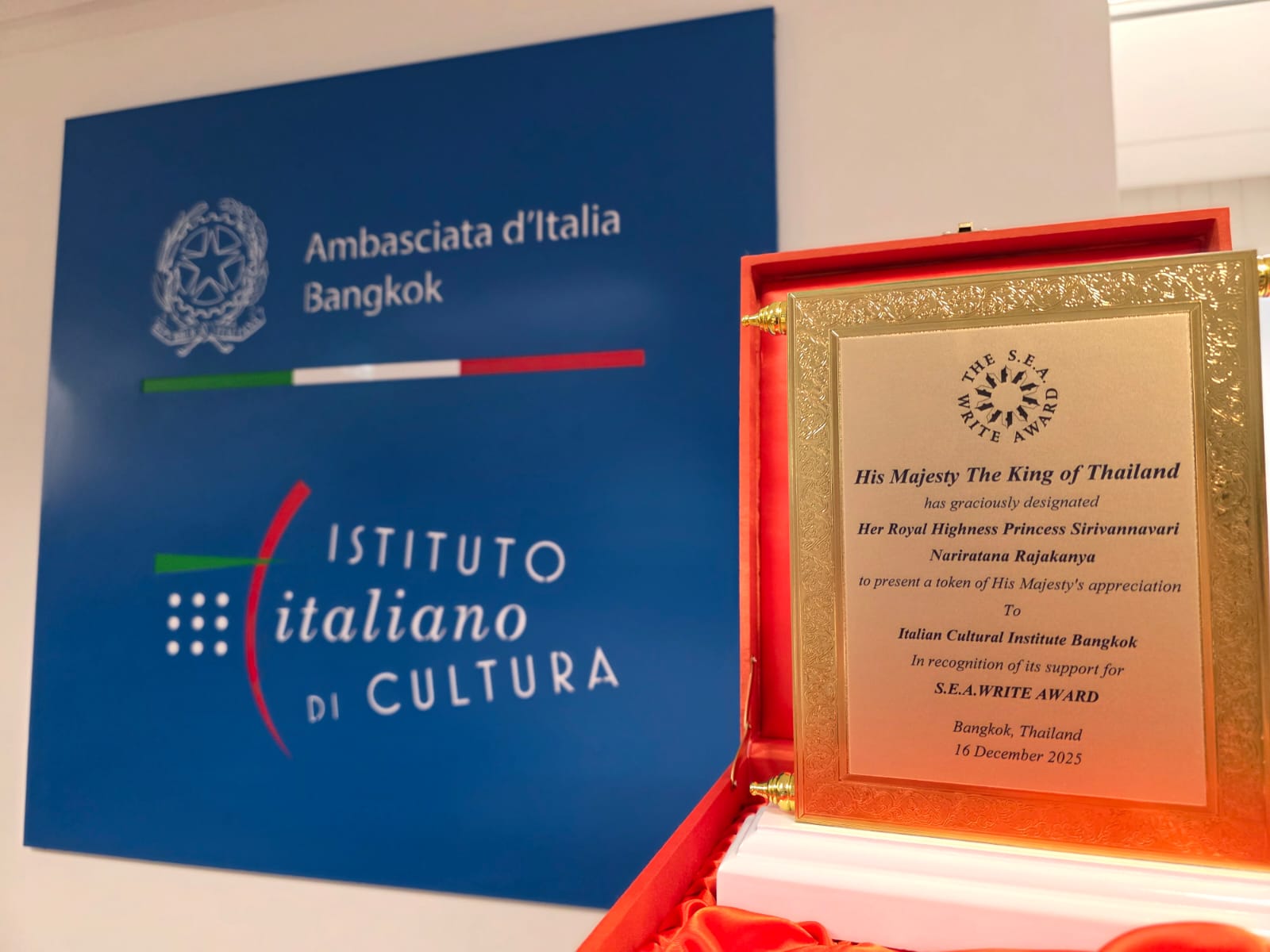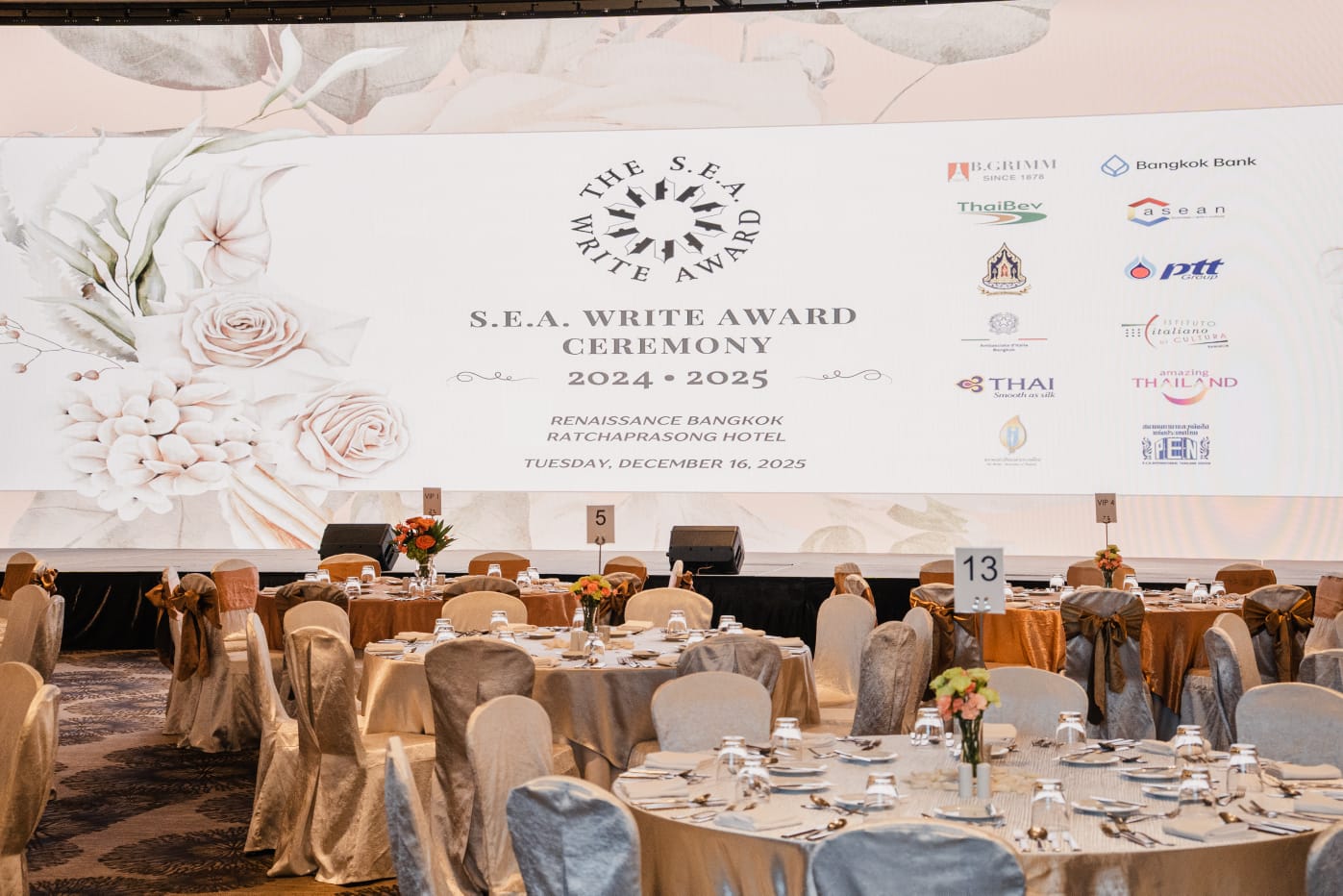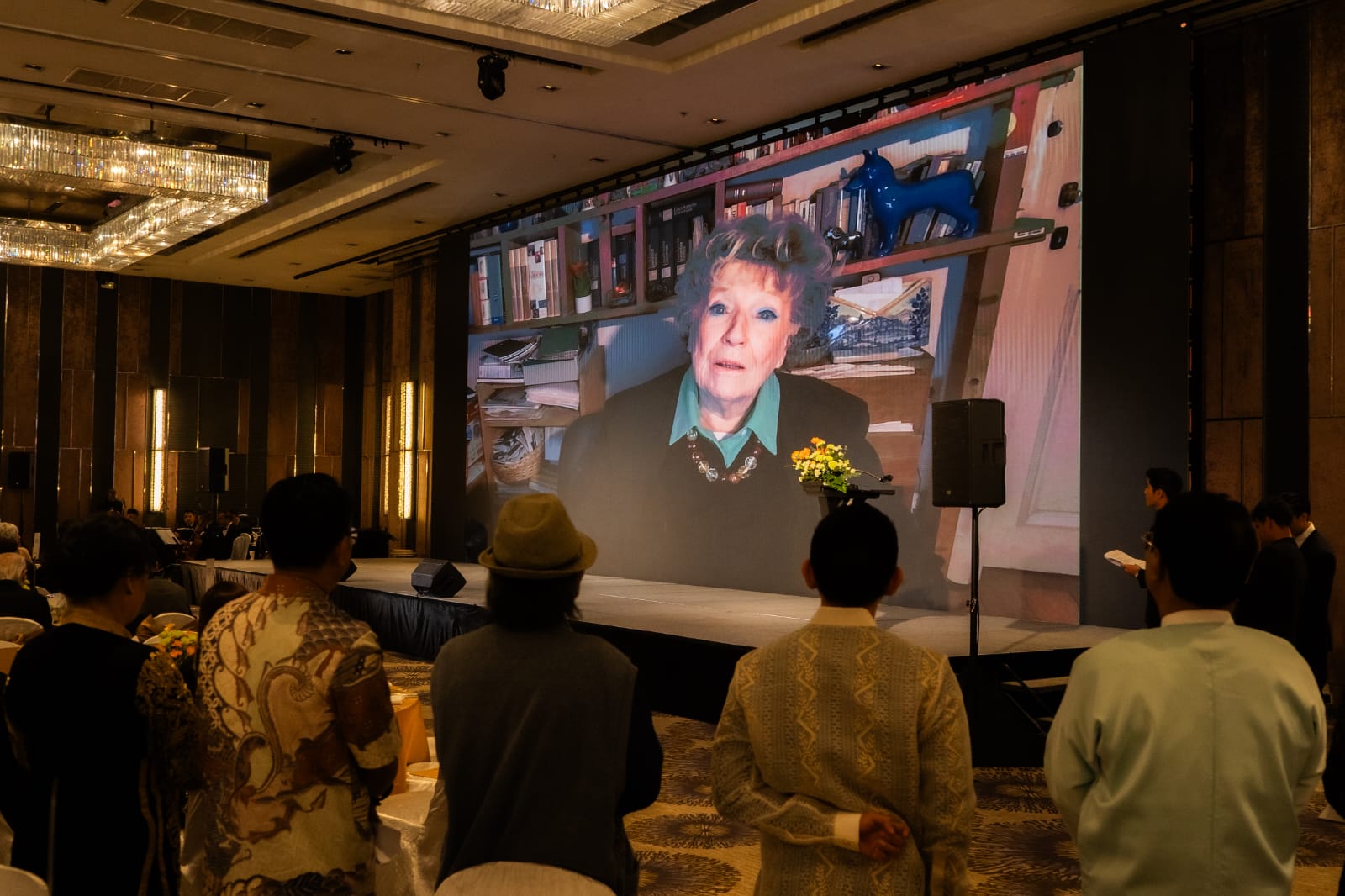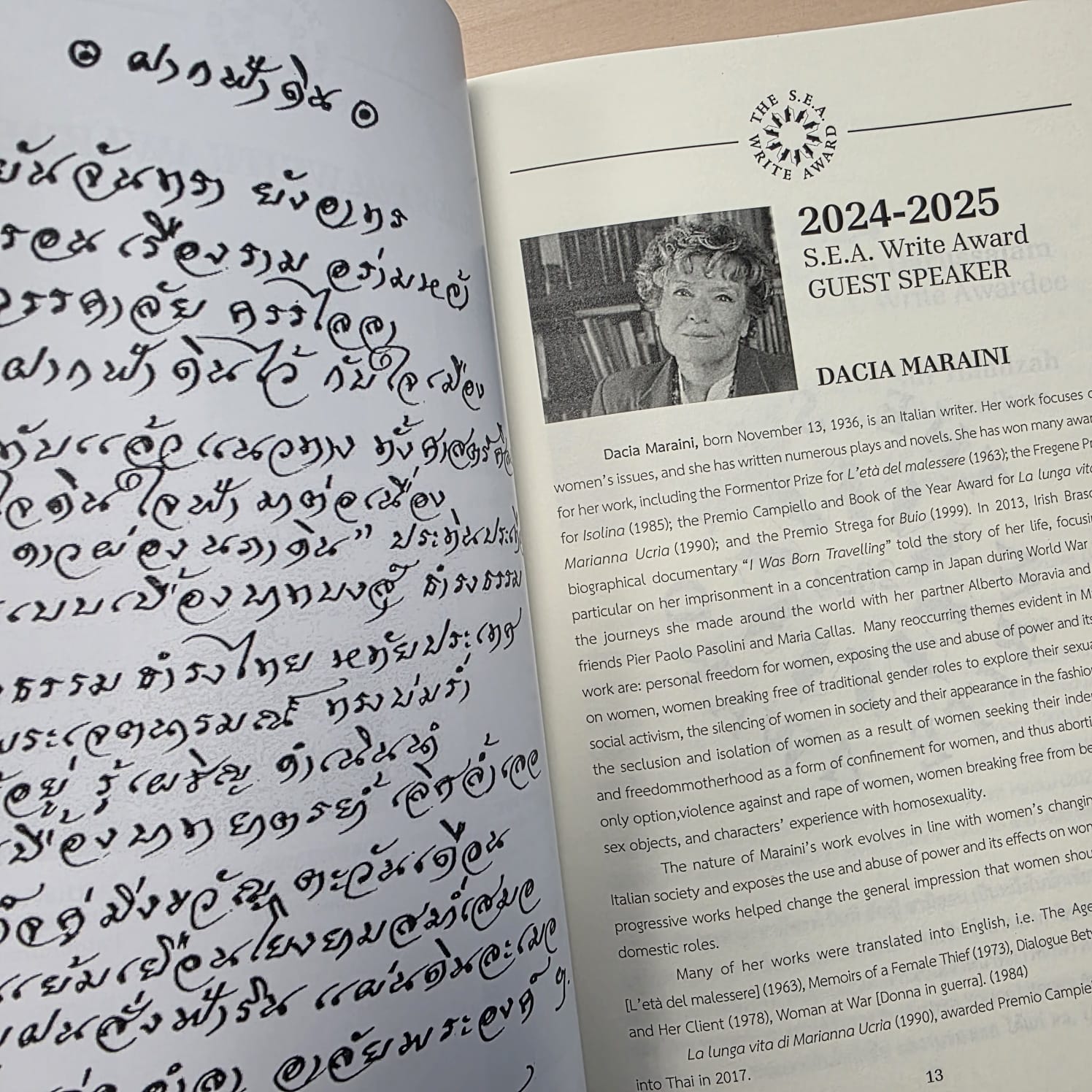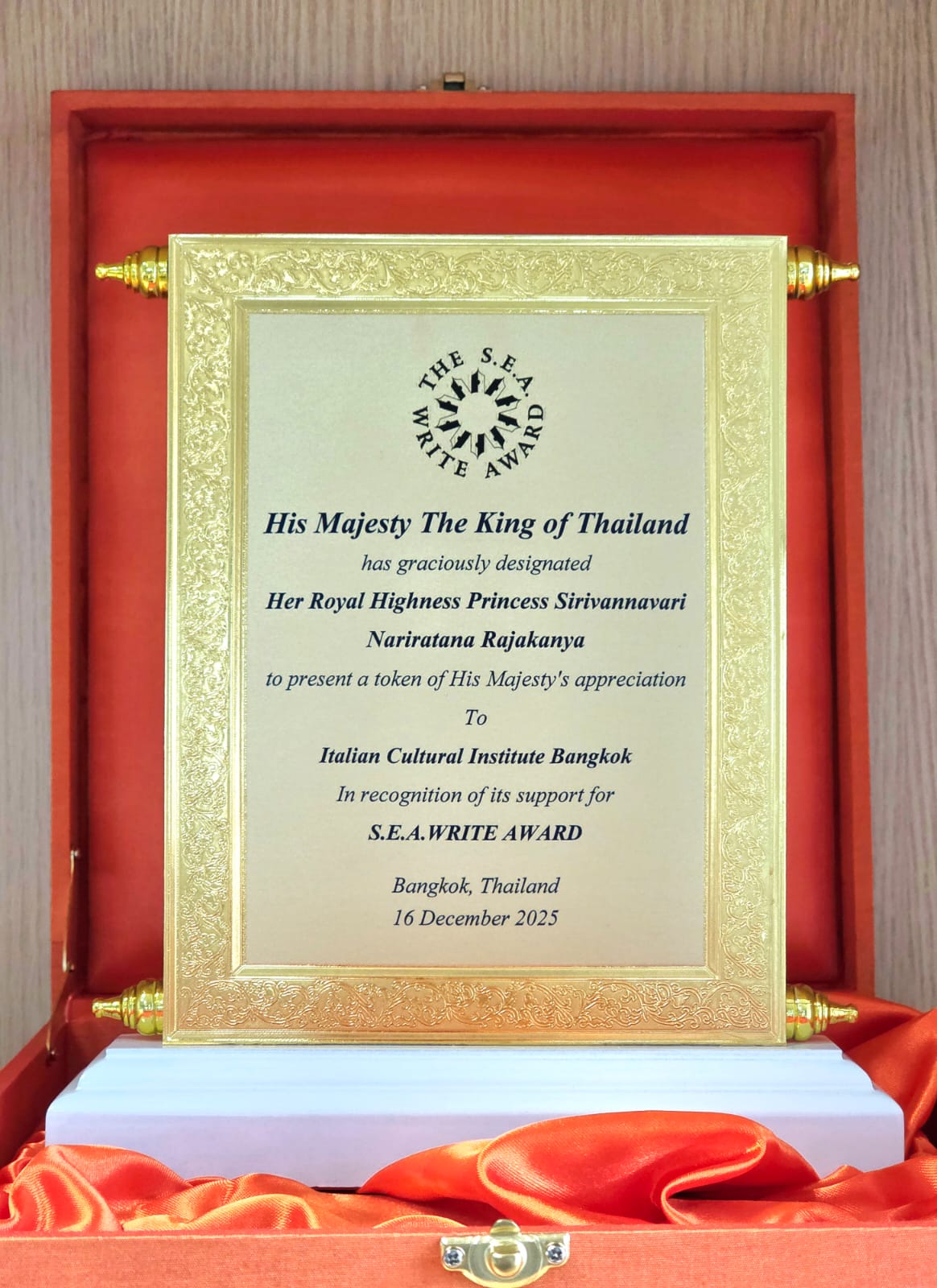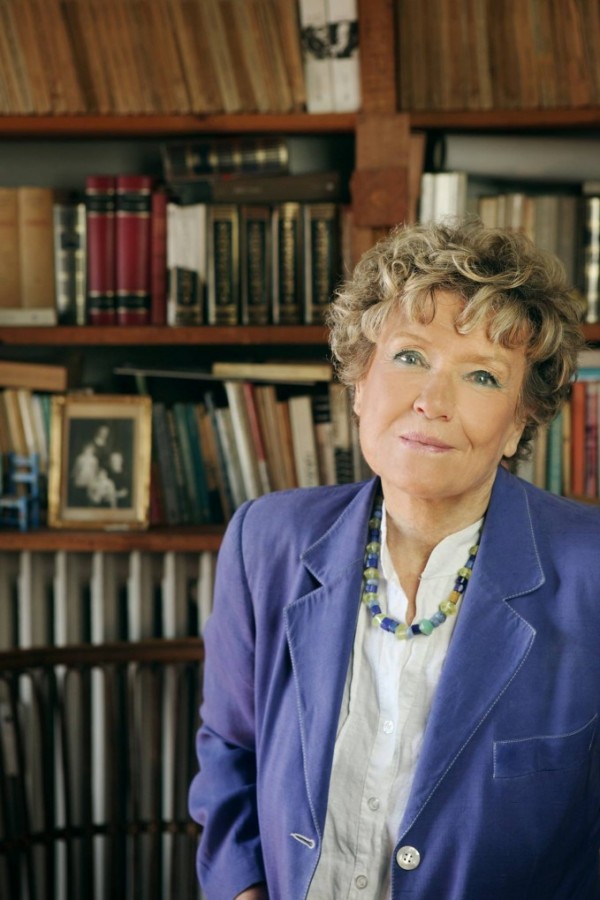
This year, the Italian Cultural Institute in Bangkok and the Italian Embassy in Bangkok are proud to be among the official sponsors of the S.E.A. Write Award, celebrating the first-ever Italian writer, Dacia Maraini, as the keynote speaker at the S.E.A. Write Award gala via livestreamed video. She will subsequently be present on various occasions to share her experience and engage with Thai and international audiences in Bangkok from January 19 to 24, 2026.
Born in Fiesole in 1936 and spent her childhood in Japan during a challenging historical period, she has developed an extraordinary literary and theatrical career, engaging with key issues such as women’s rights and social justice. Her cultural contribution and international standing represent a significant enrichment for the intercultural dialogue promoted by the S.E.A. Write Awards, thus strengthening the ties between Italy and Thailand, as well as Southeast Asia.
The South East Asian Writers Awards (S.E.A. Write Awards), established in 1979, are one of the most prestigious literary awards in Southeast Asia. The prize is awarded annually to one writer from each ASEAN member country, evaluating works of various literary genres, from fiction to oral tradition, based on criteria of originality, artistic value, and cultural relevance. The ceremony takes place in Bangkok under the high patronage of the Thai royal family, with the special support of Her Royal Highness Princess Sirivannavari Nariratana Rajakanya. The event is enriched by the presence of internationally renowned keynote speakers, who offer in-depth reflections on the role of literature and culture in contemporary society. Among those invited in previous years are prominent figures such as Nobel laureates Orhan Pamuk and J.M.G. Le Clézio.
Dacia Maraini
Dacia Maraini was born in 1936 in Fiesole, Tuscany. At the age of three, she moved with her family to Japan, where she spent much of her childhood. After the war, the Maraini family returned to Italy and settled in Bagheria, Sicily. In 1954, young Dacia moved to Rome to study at university. Her literary career also began there, debuting in 1962 with the novel La vacanza.
Already in the 1960s and 1970s, Dacia Maraini was very active in the political debate on women’s rights, contributing significantly to two important referendums on divorce in 1974 and on abortion rights in 1981.
In 2018, she published Voci, a collection of texts reflecting on the condition of women, society, and the relationship between generations. Her novel L’altra figlia was published in 2021, a work that explores family dynamics and the sense of belonging, themes dear to the writer. In addition to novels, poems, and plays, Dacia Maraini has written the screenplays for more than ten films, including Marianna Ucrìa (1997), winner of three David di Donatello Awards and three Nastri d’Argento Awards, and numerous essays, establishing herself as one of the most important and influential voices in contemporary Italian literature.
During her long and intense career, Dacia Maraini has received numerous prestigious awards and recognitions, both in Italy and abroad. Her novel Buio, published in 1999, won the Strega Prize, Italy’s most prestigious literary award. In 2021, she was awarded the Cesare Pavese Prize for Lifetime Achievement and was awarded the title of Commendatore of the Order of Merit of the Italian Republic, an honor that recognizes her cultural and social commitment.
At the international level, in 2022 she was awarded the Federico García Lorca International Prize, given to outstanding figures in the field of literary engagement and human rights advocacy. In 2023, on the occasion of her eightieth birthday, the Mantua Literary Festival dedicated a special event to her to celebrate her career and her ongoing civic commitment.